Blood Sugar Management Supplement or Better Sleep: What the Studies Actually Show
Quick Answer: Sleep or a Blood Sugar Management Supplement?
Sleep first. Controlled laboratory studies show that cutting healthy volunteers to roughly four or five hours in bed for only a few nights measurably reduces insulin sensitivity and worsens glucose tolerance, and that the effect recovers once normal sleep returns. No blood sugar management supplement has been tested as an antidote to that, so a capsule cannot buy back the nights you did not sleep. Fix duration and timing first, then judge whether a formula adds anything on top.
- How fast it happens: effects on glucose handling show up within days of short sleep, not months.
- How strong the evidence is: repeatedly reproduced in small controlled crossover trials — unusually consistent for nutrition-adjacent research.
- What no supplement claims: no trial has tested a botanical formula against sleep restriction.

What sleep-restriction studies actually do
The design that produced most of this evidence is elegant and slightly brutal. Healthy young volunteers, usually lean and free of any diagnosis, are admitted to a sleep laboratory. For several consecutive nights their time in bed is capped at around four to five hours. Then their glucose handling is measured with an oral glucose tolerance test or, in the more rigorous studies, a hyperinsulinaemic-euglycaemic clamp — the reference method for insulin sensitivity. Each person then serves as their own control after a stretch of normal sleep.
That crossover structure is what makes the findings hard to argue with. There is no confounding by diet quality, body weight or genetics, because the comparison is the same person under two conditions. And the direction of the result has been remarkably consistent since the first landmark studies in the late 1990s: after short sleep, the same people clear a glucose load less efficiently, and their bodies need more insulin to do the same job.
Two other things are worth knowing about this literature. The changes appear quickly — within a handful of nights, and in some studies after a single night of partial deprivation. And they largely resolve with recovery sleep, which is genuinely good news: this is not presented as permanent damage but as a state that tracks how you have been sleeping lately.
Why short sleep moves glucose numbers
There is no single pathway, which is exactly why it is so difficult to counter with one ingredient. Several mechanisms have been described in the research, and they all point the same way.
Cortisol and the stress axis shift: after restricted sleep, evening cortisol tends to be higher and the daily rhythm flatter, and cortisol opposes insulin. Sympathetic nervous system activity rises, which affects how muscle takes up glucose. Appetite signalling changes too, with the hunger and satiety hormones moving in a direction that makes highly palatable food more appealing — so the behavioural knock-on is more evening carbohydrate on top of the hormonal effect. Add circadian misalignment, where eating happens at a body-clock time poorly suited to it, and the picture is not one lever but four.
This matters for the supplement question. When a mechanism is multi-channel and hormonal, the plausibility of a single botanical closing the gap drops sharply. It is not that supplements are useless; it is that they were never designed for this job.
How the effect sizes compare
Comparing a behaviour to a product is always slightly unfair, because they are measured differently. The table below is about the character of the evidence, not a league table of numbers. Where a figure is not shown, that is because the honest answer is that it varies too much between studies to quote as a single value.
| Intervention | Typical study design | Direction reported | Strength of evidence |
|---|---|---|---|
| Sleep restriction (about 4–5 h for several nights) | Controlled lab crossover, same person as own control | Insulin sensitivity falls; glucose tolerance worsens | Strong and repeatedly reproduced |
| Recovery / extending sleep | Short lab and outpatient trials | Markers move back toward baseline | Moderate — fewer and shorter trials |
| Regular sleep timing | Observational plus circadian misalignment protocols | Irregular timing tracks with poorer markers | Moderate |
| Botanical blood-sugar formulas | Weeks-long randomised trials, often small | Modest support for glucose markers, ingredient dependent | Mixed — varies by ingredient and product |
| Supplement as an offset for short sleep | No trials of this question | Unknown | None |
The uncomfortable part of this literature is that the free intervention has the stronger evidence, and the thing you can buy has the weaker one.
Where a blood sugar management supplement genuinely fits
None of the above makes supplements pointless. It makes them a second-order decision. A blood sugar management supplement is studied as background support for glucose metabolism in people living ordinary lives, over weeks, with endpoints such as fasting glucose and HbA1c. That is a real question and some ingredients have real data behind it — berberine most of all, with chromium, cinnamon and Gymnema in supporting roles. We went through that ingredient by ingredient in our evidence breakdown of berberine and cinnamon.
What no product has evidence for is undoing a sleep deficit. If you sleep five hours a night and take a formula, you are running two variables at once and cannot attribute anything to either. If you fix sleep first and the numbers improve, you have learned something true. If they improve and then you add a formula, you at least know what you are testing.
There is also a plain economic argument. People searching for the best blood sugar supplement are often several purchases into the category already. Sleep costs nothing, has the better evidence base, and improves the thing that supplements are meant to support. The nutrient literature keeps telling the same story: the large vitamin D and blood sugar trials found their clearest signal in people who were short of it to begin with, not in people already replete. Any reasonable spending order starts there.
Sleep sorted, and still want to compare formulas?
If the basics are in place and you are weighing up the best blood sugar support supplement options, the ingredient list and the amounts per serving are what to judge. Current pricing and the guarantee terms are shown on the official store page.
Check the Official StoreSequencing: what to change, in what order
The practical version of this article is a running order, not a shopping list. Start with duration. Most adult guidance, including from the US National Heart, Lung, and Blood Institute, lands on seven to nine hours a night, and the association with worse metabolic markers shows up most clearly below six. If you are chronically at five and a half, adding forty-five minutes is the single highest-value change available to you.
Then fix timing. A consistent sleep and wake time, including at weekends, keeps the body clock aligned with when you actually eat. Shift workers are the clearest natural experiment here, and the metabolic literature on rotating shifts is not encouraging — which is precisely why regularity, where you have any control over it, is worth defending.
Then handle the two chemicals that quietly shorten sleep. Caffeine has a half-life of roughly five to six hours in most adults, so an afternoon coffee is still measurably present at bedtime; cutting the cut-off back to early afternoon is often more effective than any sleep supplement. Alcohol is the other one: it shortens the time it takes to fall asleep and then fragments the second half of the night, which is why a nightcap and a good night's sleep are not the same thing.
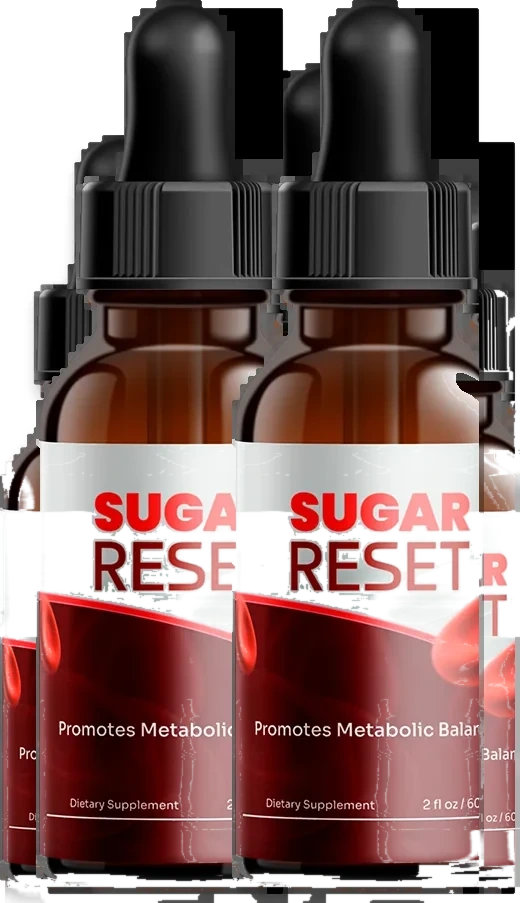
Only after that does a formula become a clean test. And at that point, our SugarReset breakdown is a reasonable place to see how one liquid formula puts its ingredients together and what each is actually studied for.

Light, movement and the two easy wins
Two behaviours sit between sleep and glucose and are worth their own paragraph because they are cheap and the mechanism is clear.
The first is daylight. Getting bright light into your eyes reasonably early in the day is the strongest available anchor for the body clock, and a well-anchored clock makes falling asleep at a consistent hour markedly easier. The evening mirror image matters too: bright light late, particularly from screens held close to the face, delays the melatonin rise. Harvard's health publishing group has covered this in detail, and it is one of the few sleep-hygiene claims with a solid physiological basis rather than folklore.
The second is a short walk after meals. Light movement in the thirty to sixty minutes after eating recruits muscle to take up glucose without needing much insulin, and even brief walks have been studied for their effect on post-meal glucose. It is the closest thing in this whole field to a free lunch — or at least a free dessert — and it stacks with better sleep rather than competing with it. The same modest, immediate logic applies to taking vinegar before a carbohydrate meal: a real but small effect on one meal, and no substitute for the sleep underneath it.
What this evidence cannot tell you
Several limits deserve to be stated rather than buried. The sleep-restriction studies are mostly short, mostly small, and mostly done in young, healthy, lean volunteers under laboratory conditions. That is what makes them clean, and also what limits them: a controlled four-hour night in a lab is not the same as a decade of six-hour nights with a job and a toddler. Extrapolating precise long-term risk from these designs is not warranted.
Second, the observational research linking habitual short sleep to metabolic outcomes cannot separate cause from effect on its own. Poor sleep might worsen glucose handling; poor metabolic health, pain, or sleep apnoea might also wreck sleep. The two very likely feed each other. If you snore heavily, wake unrefreshed, or your partner has noticed pauses in your breathing, that is a specific medical question — untreated sleep apnoea is strongly linked to metabolic problems and it needs a diagnosis, not a supplement.
Third, and most importantly, none of this is a treatment for any disease, and nothing here should be read as a claim that sleep or a supplement changes the course of one. High fasting glucose, an abnormal HbA1c, or symptoms such as unusual thirst, frequent urination, blurred vision or unexplained weight loss are reasons to see a clinician, not reasons to reorganise your bedtime and hope.
Medical note: this article is general information, not medical advice. Persistent insomnia, heavy snoring or daytime sleepiness deserve medical assessment. Speak to a healthcare professional before starting any supplement, especially if you are pregnant, nursing, taking medication or managing a condition such as diabetes.
Frequently asked questions
Does poor sleep really affect blood sugar?
Yes. Controlled laboratory studies in healthy volunteers have restricted sleep to around four to five hours a night for several nights and then measured glucose handling, and they consistently report reduced insulin sensitivity and poorer glucose tolerance compared with the same people after normal sleep. The changes are measurable within days, and they generally recover when normal sleep is restored. This is one of the most reproducible findings in the field.
Can a blood sugar management supplement make up for short sleep?
No, and no supplement has been tested for that purpose. Sleep-restriction studies change insulin sensitivity through hormonal and nervous-system pathways, and there is no trial showing that a botanical or mineral formula undoes that specific effect. A supplement is studied as background support for glucose metabolism in people going about ordinary life, not as an antidote to sleep debt.
How many hours of sleep are usually recommended for adults?
Health agencies including the US National Heart, Lung, and Blood Institute put the usual adult target at seven to nine hours a night, with seven hours as the floor most guidance uses. Individual needs vary, but routinely sleeping under six hours is the pattern most consistently associated with poorer metabolic markers in the research. Regular timing matters too, since going to bed and waking at wildly different hours produces some of the same effects as short sleep.
What should I fix first, sleep or supplements?
Sleep, because it is free, the evidence behind it is stronger, and it changes the baseline that any supplement would be added to. A sensible order is to fix sleep duration and timing first, then daily movement and the composition of meals, and only then consider whether a formula adds anything. If you buy a supplement while sleeping five hours a night, you will never know which factor moved your numbers.
Scientific references
- NIH NHLBI — Sleep deprivation and deficiency
- Sweeney EL, et al. — Impairments in glycaemic control do not increase linearly with repeated nights of sleep restriction in healthy adults: a randomised controlled trial (Applied Physiology, Nutrition, and Metabolism, 2021)
- Harvard Health Publishing — Blue light has a dark side
- Mayo Clinic — Sleep tips: six steps to better sleep
- NIH NCCIH — Diabetes and dietary supplements: what you need to know
See what SugarReset actually contains
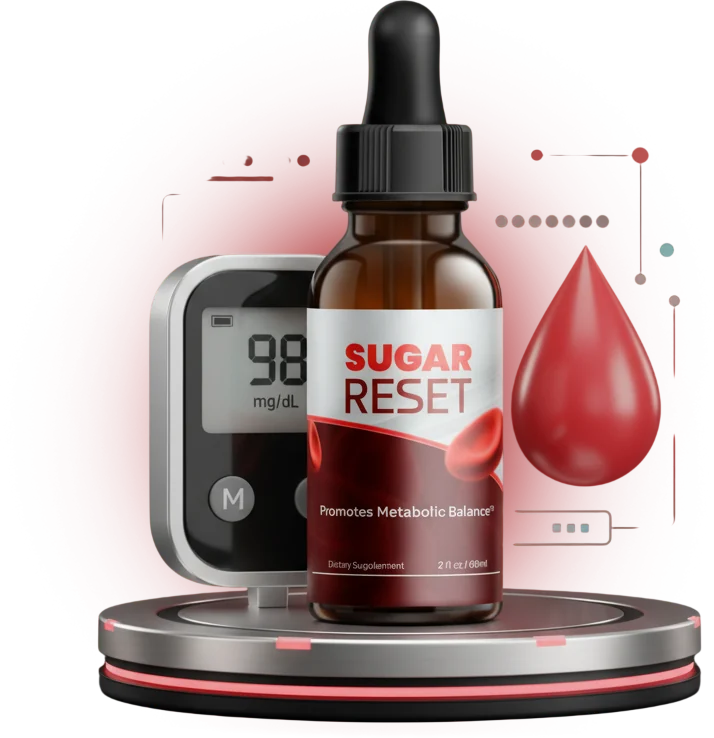
Chromium and a 22-ingredient botanical blend in a daily liquid, with no berberine — background support labeled for metabolic balance, not a substitute for sleep or for medical care. Readers asking where to buy SugarReset will find the current options on the official store page.
Visit the Official Store